Thursday, October 27, 2016

Sable Otey’s journey to the 2018 XXIII Olympics Winter Games in PyeongChang, Korea

Bobsledder Sable Otey is determined to make it to the Winter Games
in PyeongChang, Korea. (Courtesy photos)
Bobsledding is synonymous with track and field in terms of the preparation that’s needed to reach the finish line. In both sports, the athlete would need strength and conditioning training, balance, speed, power, perseverance, and the right mindset. Chip in a healthy work ethic too.
And it wouldn’t diminish the athlete’s athleticism one iota to secure a sponsor or a benefactor who wouldn’t mind making a monetary contribution toward a worthy pursuit – the 2018 XXIII Olympics Winter Games in PyeongChang, Korea.
That athlete is Sable Otey, a 29-year-old native Memphian who knows what it takes to succeed in both sports. She sprinted in high school, college, and post collegiate. Now she’s turned her attention to bobsledding, a winter sport she is training thrice as hard for to qualify for the Olympic team.
Sable Otey: Olympic bound.
“Some athletes are funded. I have to work full time,” said Otey, a physical education teacher at two Shelby County Schools –  Lowrance Elementary on Monday through Thursday and Cromwell Elementary on Fridays.
In addition to her teaching duties, Otey juggles a hectic training schedule with her family – a husband of more than 10 years, Navy veteran Reuben Otey, and their son, Amar’e.
“I train three to four hours a day. It’s very exhausting, very tiring,” said Otey, training as the breakman. “I wake up in the morning and I have to train before work. Then I have to train after work. It’s hard to try to find time for everybody. Some kind of way I make it.”
The family works together, she added. It’s a cohesive unit.
“We make it work together. That’s the most important thing. I can’t do it by myself. I can’t do it without the support of my family. They understand if I come home and just fall asleep. Some days I just come home and I’m just beat.”
But not that beat that Otey would fail in her quest to make it to the Olympics. But she wasn’t always sure of herself, or whether or not she has the talent, skills and moxie to make it to PyeongChang and bring home the gold medal.
“I was down on myself at first, because I have this great opportunity. But I can’t execute it fully,” said Otey, noting how difficult it is to train for the bobsled event. “I can’t train for four or five hours like I need to because I have to go to work.”
Otey’s desire to compete in the Olympics manifested in 2011 while training for the 100-meter hurdles. Then she got pregnant and had to table her plans. But another opportunity to make it to the Olympics would spark interest by way of a simple suggestion.
“My god brother actually told me about it (tryouts in South Carolina). He said I should go and try out for the team,” said Otey. She did, on Aug. 8, 2015, and received the second highest score, men and women combined. The next day, she received an email from the United States Bobsled Federation inviting her to the rookie camp in Lake Placid, New York.
“For some reason I just couldn’t figure out how to push that sled correctly to save my life. I couldn’t figure it out. It was horrible,” said Otey, struggling through the three-month tryout. “I ended up getting a hamstring injury. That set me back a little bit, but I kept pushing through.”
She made the team in October 2015. Now she’s focused on the 2018 Olympics. James Lancaster coaches sprinting and weightlifting when Otey trains at D-1 Sports and Injuries Training Center in Collierville, Tenn. Guy Cullens coaches sprinting and strength conditioning when she’s training elsewhere. Both coaches work pro bono.
Last week, Otey trained at the Olympic Training Center in Lake Placid, New York. “I’m super sore, super exhausted,” she said. “But I need to work on a couple of things, things like sprinting and running fast. The real deal is working on the ice. That’s where it counts.”
As the breakman, Otey has to be strong and physically fit. Her timing has to be spot-on too. A two-woman sled (without the crew) can weigh up to 300 pounds. It can travel up to 90 miles per hour on ice depending on the push from the breakman.
The next competition is in Calgary, Canada. Then Otey will be on her way to Whistler, Canada, until she makes it to PyeongChang, Korea.
For more information on Sable Otey’s journey to the 2018 XXIII Olympics Winter Games, go to www.sotey2.wixsite.com, call (901) 337-3966, or email her at sotey2@gmail.com. A Go FundMe account also is set up for donations at https://www.gofundme.com/wr4jhnp3

Saturday, October 22, 2016

Beauty radiates despite hair loss

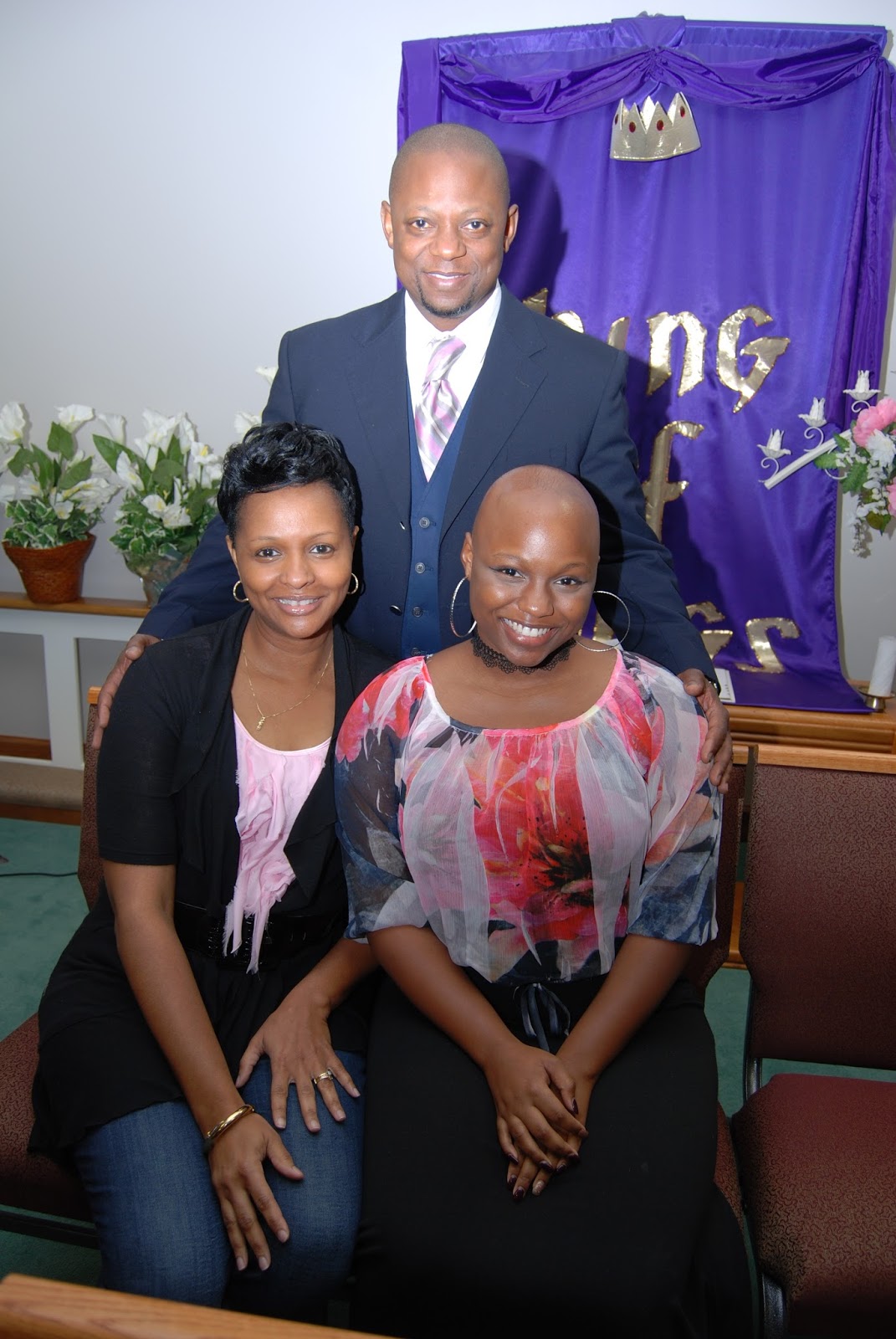
Mariah Michelle Stokes suffers from alopecia areata, a lack of hair. But her parents,
Mitchell and Sandra Stokes, make her feel like she's the most important person in
the world. (Photos by Wiley Henry)
When Mariah Michelle Stokes was born, her mother envisioned grooming her hair with dainty ribbons and colorful barrettes. But after her baby girl’s first birthday, her head-full of hair started falling out.
Something was happening to Mariah, which sent her parents, Mitchell and Sandra Stokes, searching for answers. “We took her to the emergency room,” said Sandra Stokes. “We also went to see several doctors…and Mariah had lots of blood work.”
They soon found out why Mariah had loss her hair. “At that time, they (doctors) determined it was alopecia areata, an auto-immune disease that attacks the hair (follicles),” said Sandra Stokes, who was devastated after receiving the glum diagnosis.
Chances are most people wouldn’t know what alopecia areata is unless a loved one, or someone they know, is struggling with the disease. According to the National Alopecia Areata Foundation, this “polygenic disease” affects as many as 6.8 million people in the United States with a lifetime risk of 2.1 percent.
Mariah Michelle Stokes and her parents
Mitchell and Sandra Stokes.
In some cases, there may be a total loss of hair on the scalp, face and body, and then hair may return to those areas. In either case, there is no cure for alopecia areata.
“I never had an issue with it,” said Mariah, who is quick to flash a toothy smile when complimented, and even when she’s not. “I never felt self-conscious. I feel self-conscious about other things – but not about [not] having hair.”
Mariah never really noticed that she was different until she started school and began socializing with her playmates. “I never felt different,” she said. “When I’m around other kids, I probably noticed I’m the only person who looks like this.”
“When all of this first happened, I wondered what I could do to help her,” said Mitchell Stokes, recalling a conversation with Mariah who asked him point-blank why she had to be the one stricken with alopecia areata.
“I tried to have a sound answer for her as much as I could,” he said. “I just told her that God knew she could handle this…and that it will help somebody else.”
The couple, also the parents of 31-year-old Mitchell Jarod Stokes, instilled in their daughter that she is beautiful, imbued with self-confidence, and possesses a positive attitude.
“My parents didn’t make me feel like I was different,” said Mariah. “They always told me that I was beautiful. I never had a problem without hair. I actually like it now.”
But that wasn’t always the case. During her formative years, mean-spirited kids teased Mariah and gawkers, including curious adults, assumed she has cancer.
“I’ve dealt with people staring, people coming up to me asking me if I have cancer. And I’ve been called a milk dud,” said Mariah, now 18 and a freshman attending Arkansas State University Mid-South in West Memphis, Ark.
“Beauty comes from the inside out,” said Sandra Stokes, recalling an incident when she was ready to “jack up” a group of cruel children who encircled Mariah in a mall. “I’m like, ‘Leave my baby alone. Give us some privacy.’”
Mariah is used to roving eyes and revolving heads. “She doesn’t let it get her down,” her mother said. “Sometimes I wonder if she really knows she really doesn’t have hair.”
Mariah said she just wants to be happy and encourage others. She also likes dancing and glorifying God, which she gets to do on Sunday mornings at Golden Gate Cathedral, her family’s home church. She’s a praise dancer and once sang in the choir.  
She loves children too.
“I want to be an OBGYN,” she said. “I’ve always liked kids, but I didn’t want to be a pediatrician because I don’t want to see sick kids. I feel like bringing them into the world. I want to help people. I want to deliver babies.”
“We’re Christians,” said Mitchell Stokes. “So we tie the word into everything that we do. We let her know that all things work together for the good for those who love the Lord.”   

Thursday, October 6, 2016

Daughter of Ray Charles opens up about drugs and life without her father

Sheila Raye Charles finds solace in testifying about her life as the drug-dependent
daughter of the legendary Ray Charles. (Photo by Wiley Henry)
Her early childhood and years thereafter were painful, depraving and angst-filled, to say the least. But Sheila Raye Charles didn’t have much to look forward to without having much of her father in her life, the legendary Ray Charles.
Deprived of the doting relationship Charles sought with her father was enough to send her cascading down a seemingly never-ending slope into drug dependency and deviant behavior, which mirrored, in a way, her father’s 17-year heroin addiction.
Charles’ drug of choice was crack cocaine. She grappled with it for 20 years, served three prison terms, and, as a result, lost custody of her five children. She wrestled with what could be described as her demons, but managed to break free after undergoing a kind of Damascus Road experience.
 “Sheila Raye has fought off her demons and now has a powerful testimony,” said Wanda Taylor, president/CEO of Ladies in Need Can Survive, Inc., a 501(c) 3 non-profit transitional home for women who grapple with some the same vices and destructive behavior that nearly sent Charles over the edge.
Taylor was impressed with Charles’ riveting story and subsequent breakthrough and invited the singer, songwriter, evangelist, author and former substance abuser to Memphis on Sept. 23 to headline LINCS’s “Taking My Life Back” conference at the Pursuit of God Transformation Center in the Frayser community.
Charles has been telling her story to audiences from a very few to tens of thousands all around the world. The handful of people who came to hear her speak and sing at the Center drew inspiration from her testimony.
“It wasn’t my dream to be a speaker about addiction and recovery,” said Charles, who aspired to become a rock star when she was a little girl. “But through my journey of trying to be a rock star, I found myself engulfed in all the things that came with that – sex, drugs and rock and roll – the whole stigma.”
“She is not alone in the vices that had her bound,” said Taylor, who, like Charles, struggled with drugs, sex, errant behavior, and a stint in jail before she found God, then LINCS. She’d made up her mind that the road she was traveling would come to an end.
“It was easy for me to fall in that path, because I was a child in an adult’s body full of pain and hurt and sadness and anger,” said Charles, “all the things that a child goes through when you experience the things that I experienced – sexual abuse, abandonment issues from my father, an alcoholic mother.”
Charles spent a lifetime trying to suppress those “pains, hurts, shames and sadness.” The only way out, she said, was through self-medication.
 “At the age of 19, I had my first free-basing...I tried it and it was the most wonderful thing I’ve experienced,” said Charles, who would become dependent on the drug. “I didn’t get addicted then. It was after the age of 24 while experiencing Postpartum Depression.”
After Charles’ daughter was born, flashbacks took her back to that grim moment in time when she was sexually abused as a little girl. “I started remembering the euphoria I got from the cocaine,” she said. “I began to use it and it just spiraled down to a point where I literally lost everything in my life.”
She had become unhinged, destroying herself. She’d become the addict that she hated in her father. “He was an extraordinary man, but a horrible guy,” said Charles, one of 12 children her father pressed to succeed. “My father was hard on us almost to a fault.”
It wasn’t until later on in life that Charles started embracing her father. “Later on I felt cheated that I wasn’t able to be more intimate in his life,” she said. “He tried to show us love, but it wasn’t that ‘father knows best’ love. He didn’t have the tools to parent.”
Charles lives in Minneapolis, Minn. She is married to Michael “Tony” Steptoe. In 2007, she started One Way Up Prison Ministries to encourage women in prison to stay away from trouble and live productive lives, which she had failed to do before turning the page on a sordid lifestyle.
Charles details her story in the recently published book “Behind the Shades: Hope Beyond the Darkness.” It is a moving testimony about “redemption, reconciliation, and healing.” Sheila Raye Charles can be reached at (612) 876-7964.

Newly installed officers at masonic temple testify to the benefits of freemasonry

The 2016-17 installation of officers of Williams E. Eddins Memorial Lodge
#377. (Photo by Michael Floyd, Esq.)
There are dozens of masonic temples in the city of Memphis. Unbeknownst to the general public, membership in this private fraternity continues to creep upward. The William E. Eddins Memorial Lodge #377 (Prince Hall Affiliated), for example, recently installed five officers.  
In an unprecedented move, the “brothers” bestowed upon Tony M. Jackson, a young businessman and one of their latest recruits, the title of Lodge Secretary. Jackson “was initiated, passed, and raised to the sublime degree of Master Mason” in April.
“I believe the family of brothers elected me to the secretary position because they saw that drive in me and my willingness to work as a part of the team to better the lodge and hold to the theme of building on a strong foundation,” said Jackson, owner of Arlington Computers in Arlington, Tenn. He also is the author of “Pulling Customers Back To Small Business,” a business guide.
On Sept. 4, Jackson was officially installed at Pilgrim Rest Baptist Church along with Michael Richardson, Lodge Treasurer and Past Master; Eric Williams, Senior Warden; Timothy Jones, Junior Warden; and Everett Burks, Worshipful Master.
Richardson said there were three keys that inspired him to become a mason: 1) His grandfather, Deartis Barber Sr., a Freemason; 2) “…the historical impact that the fraternity has had throughout this country and the world”; and 3) “I believe that in unity there is strength. And as farfetched as it my seem, I believe that some day we all will be unified by the common bond of peace and love.”
Richardson was initiated in November 2004. Freemasonry has been an integral part of his pedigree dating back to his grandparents, who raised him, his mother and father, and several aunts and uncles. He has held several positions at the lodge.
“Freemasonry teaches us that as brothers we are all ‘On the Level.’ We meet each other on the same ground,” Jackson explains. “I felt the true brotherly love and was even blown away that the Past Masters, Masters and Wardens welcomed me with open arms.”
Although Freemasonry is shrouded in secrecy, there are characteristics that are common among the brothers, said Jones, a corporate security officer for Memphis Light Gas and Water. He was initiated, passed and raised in William Eddins #377 in 2015.
 “What a mason does is very simple, but not limited to being an upright [and] honest man of great character who sets a positive example in his community by his charitable works and deeds,” said Jones. “Things such as feeding families in need, mentoring the youth and community clean up efforts.”
There are benefits, too, added Williams, such as establishing a closer connection with God, camaraderie with the brothers, and drawing closer to one’s family. “Men are naturally providers and problem solvers. So Masonry is embedded in you,” he said. 
Williams also noted the importance of having “someone to talk to when there is no one there and not judging you, just there to lend an ear and a helping hand.”
“Continuing to Build on a Strong Foundation” was the theme of the installation ceremony, which drew more than a handful of supporters.
“We are here to develop the character and shape the minds of any qualified and vouched-for brother that knocks at our door,” said Burks, who was raised to the sublime degree of Master Mason on May 3, 2008. “We will build, we must build, and we are building on that strong foundation.”
Burks is employed at Smith and Nephew and has held several positions within the lodge.
Jackson said Freemasonry will take him as far as he wants to go. “It’s just like anything else: You get out of it what you put into it,” he said. “We are a working lodge. That means we earn our titles and degrees through hard work and perseverance.”
“The wisdom, youth and passion that these men possess will surely benefit not only the lodge, but the community of South Memphis, the city of Memphis, and hopefully the state of Tennessee, if not further,” said Richardson.

Thursday, September 15, 2016

The Invaders hope to set the record straight in new documentary

The Invaders: Dolores Jordan Briggs (left), Jabril Jabez, Minister Shukhara Yahweh,
Charles B. Smith, Dr. David Acey, Dr. Coby Smith and Juanita Thornton. (Photo by Wiley Henry) 
For nearly 50 years, several members of a 60s-era radical group from South Memphis have tried to debunk the tall tell that they’d instigated the riot that broke out during the first march that Dr. Martin Luther King Jr. led in March of 1968 in support of the striking sanitation workers.
“I’m happy that Memphis to some extent has decided to embraced us,” said John B. Smith, a founding member of The Invaders, a militant group of college students, Vietnam-era veterans, musicians and intellectuals espousing Black Power.
Smith, who lives in Atlanta, was in Memphis on Sept. 7 for the private viewing of a feature-length documentary about The Invaders as told by some of the members along with never-before-seen film footage and photographs from various archives.
“The general opinion is that we started the riot. Now we’re able to show people the documentary and what actually happened,” said Smith, who reconnected with some of the Invaders at Collins Chapel CME Church, site of the private viewing.
The viewing of the documentary coincided with the church’s 175th anniversary and the 101st birthday of the Association for the Study of African American Life and History (ASALH), a nationwide organization founded by Carter G. Woodson, the “father” of Black History Month.
“We are about African-American history,” said Clarence Christian, president of the Memphis Area Branch of ASALH, which studies, researches and disseminates local history in the community. Chapters nationwide also research, preserve and interpret Black life, history and culture.
The local chapter hosted the documentary, which began as a classroom project, said Christian, who told the story of J.B. Horrell, a guitarist and former student who wanted to write about something that no one had ever written about before.
“So I suggested the Invaders,” said Christian. “Then I introduced him to Minister Shukhara Yahweh (a.k.a. Lance “Sweet Willie Wine” Watson), a former Invader.” Horrell made the connection, and from that first contact with Yahweh, he would go on to co-write and produce “The Invaders” documentary.
“I was fascinated with the Invaders,” said Horrell, who was present to tell the diverse audience of activists, educators and civic leaders that he’d learned a lot about social and political upheaval in the ‘60s in large part due to the Invaders project.
“This is public vindication,” said Smith, who speaks quite a few times in the 76-minute film. “Not only is it vindication, it’s an opportunity to present Dr. King from another standpoint. He was not the meek, timid individual the media has presented him to be over the years.”
  Smith shared the spotlight in the film with fellow Invaders Charles Cabbage, Calvin Taylor, Juanita Thornton, Dr. Coby Smith, Willie Henry and others. They paint a riveting picture of the civil rights movement while juxtaposing it against the non-violent principles espoused by Dr. King.
The sanitation workers’ strike drew Dr. King to Memphis. But the Invaders were already on the ground trying to strengthen the strikers’ position by attempting to stop garbage trucks from rolling into the neighborhoods. When the riot broke out, the Invaders were blamed.
Dr. King vowed to return to Memphis to finish the march peacefully. The resolution the Invaders sought for the plight of the sanitation workers differed from Dr. King’s, who mutually agreed to work with the militant group after meeting with them on April 4, 1968.
The Invaders were looking for funding for their “community unification program.” Dr. King agreed to help, said Smith, if they would serve as marshals for the Poor People’s Campaign in Memphis. They agreed.
“We met two times on April 4,” said Smith, noting that Dr. King was evolving in his tactics. “He wanted to hook up all the power groups around the country. This is what we talked about in that meeting, which would demonstrate that Black people were together all over the country.”
The last meeting ended at 5:30 p.m. At 6:05 p.m., an assassin’s bullet fell Dr. King.

Friday, September 9, 2016

There’s no denying the success of The Southern Heritage Classic

Looking back more than two decades ago, Fred Jones Jr. recalls the day he took a leap of faith – and a long with that leap a combination of moxie and aptitude – to create, package and brand the Southern Heritage Classic as one of Memphis’ biggest sports/entertainment venues.  
“I had no track record in producing an event like this in Memphis, even though I was traveling all over the country participating in events already,” said Jones, who started out as an entertainment promoter. Even the “city fathers did not believe I could pull the Classic off.”
Fred Jones Jr.
And since rivals Tennessee State University (TSU) and Jackson State University (JSU) were part of the equation, Jones had to convince the administration at both schools that he knew what he was doing. It was a tough sell, he said, even though the schools’ athletic directors were on board, but believed the game should be played on the gridiron in Memphis.
Twenty-seven years later, the two HBCUs (Historically Black Colleges and Universities) will romp the gridiron once again on Saturday, Sept. 10 at 6 p.m. before an expected 50,000-plus Classic fans cheering on their favorite team, or alma mater, at the Liberty Bowl Memorial Stadium.
The football game is the Classic’s signature event. However, prior to the kickoff, fans will be privy to other classic events over the course of three days – Sept. 8-10 – which includes two star-studded concerts, a parade, a fashion show, a golf tournament, and tailgating.
“You never know where anything will go,” said Jones, who was determined to see his idea come to fruition and to prove his naysayers wrong. “To get to 27 [years] is mission accomplish.”
In terms of corporate support, community involvement, government participation, and monetary value, what Jones has accomplished since the onset is tantamount to reaching the summit, a word he uses in the name of his company, Summit Management Corporation.
“As you track us over these first 26 years, the level of participation from corporate has increased,” said Jones, noting that FedEx has been a presenting sponsor for more than 20 years. “You can see the level of participation and the quality of our presentation.”
TSU and JSU can count on a payday of $325,000 apiece for their participation. The city of Memphis is reaping benefits as well, as residuals continue to be added to the coffers ever since Jones transformed a two-dimensional idea into an entertainment reality.
“You can’t deny the success of the Classic,” he said. “You can’t deny how the community feels about the event. You can’t deny that this is a quality event that has an impact on the community in many ways. The impact and the numbers are very clear.”
Jones said the combined total has been $10 million dollars over the course of the Classic. “But when you look at the numbers, the tale of the tape, it speaks volumes. Every survey that’s been done – the last one was two years ago – indicated that there’s a $21 million impact on the city of Memphis.”
But some people still think the “glass slippers will slip off any moment,” said Jones, who doesn’t entertain negatives. In fact, he has a contract with both schools through 2019. “We had preliminary discussions about going forward up to 2024. It’s an ongoing process.”
The enthusiasm for the Classic hasn’t waned over the years, which is good news to Jones, who intends to quarterback the Classic for years to come. Then he’ll toss it to someone who’ll take it farther than where he’s been able to take it.
“It [Classic] was built to get to 27, to 50 [years],” said Jones, noting that his son, Nathanial Jones, is “very capable” of stepping in and keeping the event going. “I want the event to go on forever. It will go on as long as there is support for the event from fans, the government, and corporate.”
If there is a barometer for Jones’ success, it is this: “As long as the people are giving me clear indications that they are satisfied with the work that we’re doing, we’ll be good.”
For more information, visit www.southernheritageclassic.com or call the Summit Management Corporation at (901) 398-6655 or 1-800-332-1991.

Tuesday, August 16, 2016

Doors open for George L. Nichols that were once closed to African Americans

After the defiant Arkansas governor Orval Faubus tried to stop nine black students from enrolling at Little Rock Central High School in 1957, Elizabeth Watkins Crawford, Clarence McKinney, Mary Luellen Owens Wagner and George L. Nichols were readying themselves to integrate the undergraduate program at East Tennessee State College (now East Tennessee State University) in Johnson City, Tenn. They succeeded in August 1958.
Fifty-five years later, the names of the four students – along with Eugene Caruthers, the first African American to be admitted into ETSC’s graduate program in January 1956 – were permanently etched into the foot of a circular commemorative fountain and historic marker facing the ETSU Multicultural Center. The unveiling and dedication was held March 25, 2013.
George L. Nichols
“We were the first college in the state to integrate, and some say the first in the South,” said Nichols, recalling his experience at the college. “We could not belong to any organizations, initially. We didn’t have much of a social life. Nobody talked to you for the most part.”
Unlike the mass hysteria and subsequent press coverage surrounding “The Little Rock Nine,” “the press didn’t cover our enrollment,” said Nichols, who was cognizant of the acts of violence spreading across the U.S. The news of segregated conditions in his hometown of Johnson City, however, was a mere blip on the radar.
“We knew the situation. We had grown up there,” he said.
Crawford, McKinney, Wagner and Nichols attended Langston High School in the predominantly white East Tennessee enclave before enrolling at ETSC. Caruthers, who had moved to Nashville from his native Chicago, taught science and directed the band at Langston before taking on the status quo at ETSC.
Nichols was the salutatorian of his class at Langston. He majored in biology at ETSC and was the first African American student to be accepted into the marching band; he played the snare drums. He also was the first African American to be commissioned a second lieutenant from ETSC’s Army ROTC program.
Of the nearly 100 white students in the program, Nichols was the only African American, a first for ETSC. “We talked to each other,” he said, recalling a weekend bus trip to Fort Bragg in North Carolina during his junior year.
“Coming back, we stopped at this restaurant somewhere in North Carolina. We sat down at the counter and others sat down at tables. So a waitress came up. She sat a plate down for the guy on my left. She skipped me. Then she sat a plate down for the guy on my right.”
As expected, the waitress refused to serve him. “I told one of my classmates to bring me a sandwich and I’ll sit on the bus and wait for them. He told me no, to stay where I was. They made all their orders and when they brought their food out, everybody got up and walked out and left the food.”  
Nichols graduated from ETSC in 1962 and enlisted in the U.S. Army. He spent 7 ½ years in the service and left with two awards of the Bronze Star; six awards of the Air Medal, two for valor; two awards of the Army Commendation Medal; the Vietnamese Cross of Gallantry with Palm; and the Parachutist Badge.
“When I left the service [with the rank of captain], I went to work at Citibank in New York City,” said Nichols, spending a total of 37 years in banking and public service that included stints at Summit Bank in New Jersey, Dime Savings Bank of New York, and the Metropolitan Transportation Authority of New York.
Nichols retired from Citibank in 2007 and moved to Nashville in 2008. On Nov. 1, 2013, he was inducted into the ETSU Army ROTC Hall of Fame. In June, he was inducted into the U.S. Army’s National ROTC Hall of Fame. General Colin Powell, the former Chairman of the Joint Chiefs of Staff, was also inducted.
Nichols received his M.B.A. from Adelphi University in Garden City, New York. He now lives in Mt. Juliet, a suburb of Nashville, and is active in Vietnam Veterans of America.