Tuesday, January 7, 2020

Emogene Watkins-Wilson was a trailblazing journalist who taught life-lessons

One of the last writing projects that Emogene Watkins-Wilson was working on was a biography of her late husband, L. Alex Wilson, the venerable editor and general manager of the Tri-State Defender during the 1950s.
L. Alex Wilson rose to national prominence after cameras caught a white mob savagely beating him while he was reporting on the Little Rock Nine’s integration of Little Rock Central High School on Sept. 23, 1957.
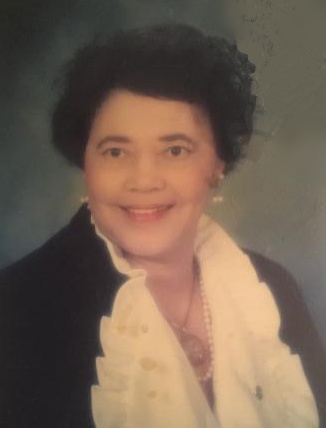
Emogene Watkins-Wilson
Mrs. Wilson herself was a trailblazing journalist working on a career of her own during that turbulent period in the nation’s history and devoted much of her life to writing and teaching school before retiring after 35 years. 
On Dec. 25, after struggling with a recent illness, Mrs. Wilson died at St. Luke’s Episcopal Hospital in Woodlands, Texas, where she was living with her daughter and son-in-law, Karen Rose Wilson-Sadberry and Alonzo J. Sadberry. She was 95.
Wilson-Sadberry remembers the life that her mother lived and the life-lessons she taught. She was her parents’ only child and called her mother a good friend. She also was inspired and enamored with her gift of writing and overall humanity. 
Considering the era in which Mrs. Wilson launched her career in journalism apparently did not hamper the strides she’d made going forward. 
She worked briefly for the Afro American newspaper in Washington, D.C., and for Life Magazine between 1952 and 1954 while teaching school. She also served as the women’s editor and society columnist for the Tri-State Defender between 1952 and 1956.
During this time, when the civil rights movement was rising to a crescendo, Mrs. Wilson met and married the Defender’s new editor, L. Alex Wilson, who died four years later. The severe head trauma that he’d sustained in Little Rock was suspected to be the cause of death.
Meanwhile, Mrs. Wilson tarried on. She continued to teach and write. Her articles appeared in other publications as well, such as The Memphis Press-Scimitar and The Commercial Appeal.
Emogene Watkins-Wilson (seated left)
spends time with her daughter and son-
in-law, Karen Rose Wilson-Sadberry and
Alonzo J. Sadberry. (Courtesy photos)
“She was a very committed person,” Wilson-Sadberry said. “She worked really hard, studied, made preparation, and was committed to excellence.”
Excellence was deeply rooted in Mrs. Wilson’s DNA. She grew up in North Memphis. Her father, Dr. Thomas H. Watkins Sr., was a physician who located his office at Bellevue and Jackson. 
Mrs. Wilson’s father graduated from Meharry Medical College in 1911. He was originally from Baltimore, Md. Her mother, Johnnie R. Watkins, was an educator and hailed from Tuskegee, Ala. 
Like her mother and father, Mrs. Wilson followed the path to higher education. She graduated from Howard University with Bachelor of Arts degrees in English and Journalism. 
She also completed coursework in Spanish at Howard and later studied Spanish in Mexico. This skills-set enabled her to teach all levels of Spanish to her students in high school. 
Mrs. Wilson’s penchant for writing, her pursuit of higher education, and her commitment to the community were impetuses that led Wilson-Sadberry to sharpen her own skills.
Rodney Van Miller, Wilson-Sadberry’s cousin, said Mrs. Wilson was “not just an aunt but a mother. She became the mother that I needed to pull me through.”
His own mother, Marilyn Miller, his aunt’s youngest sister, died when he was 13. He said his aunt stepped in as a surrogate and nurtured him as her own. “She promised my mother that she would look out for me,” he said.
The maternal benefits that Wilson-Sadberry enjoyed was likewise afforded to Miller, who lived with his father, Albert Miller, two streets over from his aunt in the Glenview community. 
“Her death is a chapter-changing moment in my life,” he said.
Like Wilson-Sadberry, Miller recalls his aunt’s particular skills in writing and the impact that she made in the community and in the classroom – and particularly on him when she was teaching at Hamilton High School.
“She would help me with my papers and made sure that I was on point,” said Miller, a graduate of Wooddale High School. “She taught me different life-skills that I use today. She was sweet and firm…and gave me the structure that I needed.” 
Mrs. Wilson was very influential in the classroom and the community, her daughter added. She touched the lives of many people, whom she either taught or wrote about on the pages of various publications. 
“She opened the window of opportunities for others, particularly her students,” said Wilson-Sadberry, who graduated in 1975 from Hamilton High School, where her mother was teaching English, Journalism, and Spanish.
Some students may feel uncomfortable attending the same school where a parent is teaching. Wilson-Sadberry wasn’t fazed by the arrangement. “It worked out,” she said. “We supported each other.”
Based on her family’s pedigree, education was the key to upward mobility, which Wilson-Sadberry understood. She pursued a Ph.D. like her grandfather, who inspired her just as much as her mother had and retired from Texas A&M University in 2013 as a sociology professor.
Wilson-Sadberry and her husband have a 23-year-old son, Adam Wilson Sadberry. She wants him to understand his grandmother’s legacy and what she meant to a lot of people. 
“It’s been good to talk to him about mother and what she was all about,” she said.
A visitation for Mrs. Emogene Watkins-Wilson is Thursday, Jan. 9, from 6 p.m.-8 p.m., and on Friday, Jan. 10, from 11 a.m. to noon at Emmanuel Episcopal Church, 4160 Boeingshire Dr., in Memphis. 
She will be eulogized at the church at noon on Friday, Jan. 10, and interred in Historic Elmwood Cemetery with her husband, L. Alex Wilson. M.J. Edwards Funeral Home has charge.

Mariah Michelle: ‘Music is My Testimony’

"Black Diamond," the EP. (Photo by Doug Bedford)
If you listen to “Free From Me” on the EP “Black Diamond,” you’ll learn a lot about Mariah Michelle Stokes. She is a young, rising soloist striking a familiar chord that young women like her would understand. 
“I’m very emotional and vulnerable,” said Stokes, 22, who uses “Mariah Michelle” as her stage name. “I wrote that song when I was depressed during a very dark time in my life.”  
What resulted from that somber experience was Mariah Michelle’s heartfelt testimony that she set to music. “I went through some things in life and I felt like music is my testimony,” she said. 
With rock-solid confidence now, Mariah Michelle hopes to inspire people, young or otherwise, via “Black Diamond,” a compilation of five R&B/soul selections with message-laden lyrics that inspire and motivate.
Mariah Michelle was front and center
at the Juneteenth Urban Music Festival
last year at the historic Robert R. Church
Park in downtown Memphis. (Photo
by Wiley Henry)
“Black Diamond” is the title track. The others are “Go Get It,” “Be Loved,” “Break,” and, of course, “Free From Me.” The songs are produced by Ja’Mar Productions.  
“All the songs have a message,” she said. “Black Diamond celebrates us. It’s a celebratory song about black people, about tearing down all stereotypes.” The remaining songs on the EP are just as compelling, she added.
Consider the chorus in “Black Diamond:” “You’re a black diamond, you gon shine forever/ They try to tie us down, but we gon reign forever/ When you black and you proud, it just don’t get no better/ All the mess we overcame, we on another level.”
While Mariah Michelle radiates confidence and touts the finished product as good – which took over a year to complete – her journey to creative expression could have ended before it began.
At the onset of her life, not long after awakening into the world, Mariah Michelle was diagnosed with an auto-immune disease called alopecia areata, which attacks hair follicles.
Completely bald now, the image that she showcases on stage and in her daily life is bold, alluring, and self-assuring. People gaze upon her baldness in admiration and surmise that it is fate that God has ordered.
 “Black Diamond” is Mariah Michelle’s foray into the music industry. But like many black singers, whatever the genre they inevitably end up singing, the church was their springboard. It’s no different for Mariah Michelle.
“We still got to walk by faith. Sometimes in the music industry it takes a while [to get noticed],” Mitchell Stokes, her father and manager, said. He plays lead guitar for his home church, Golden Gate Cathedral, and for The Soul Shockers, an R&B group.
Mariah Michelle is a praise dancer and sings in the church choir. The message that she conveys in her music is tantamount to the message that comes forth when she sings God’s praises.
“My music is clear and inspirational,” she said, denouncing music about money, sex and drugs for music that uplifts and makes a positive statement.
“She has a gift and she’s anointed to do what she’s doing,” Mitchell Stokes said. “We want her to continue to grow in Christ, continue to love herself, and continue go after her dreams.”
Her mother, Sandra Stokes, embraces the objective of ensuring that Mariah Michelle is grounded and rooted in faith. She and her husband believe that all things are possible, considering the unpredictability of the music industry. 
“I’m just the prayer warrior,” Sandra Stokes said. “I don’t know about music. I just try to keep her committed and connected to Christ.” 
Mariah Michelle initially didn’t want to sing professionally, her father said. But then something happened. Someone had seen a video on social media of Mitchell Stokes’ little girl singing and contacted him.
“She has always sung,” he said. “Our family is musically-inclined. It’s inside of her.”
Mariah Michelle added her spin: “Music is in my genes. It’s a natural gift.”
Although music is her passion, “in my genes,” education is underscored. This year, Mariah Michelle will graduate from the University of Memphis with a bachelor’s degree in psychology. Why psychology?
“I’ve always been interested in the way people think, the way the brain works, and how people behave,” she explained.
Until she walks across the stage with her degree in hand, she’ll continue to sashay across the stage at other venues, where she’ll sing songs that accentuate the positive and evoke thought. 
A song on the EP, “Go Get It,” released on Nov. 29, is reflective of Mariah Michelle’s endeavor to go after what she wants in life with a clean-cut message that sets her apart from her contemporaries.
“…I’m gon do my own thing and go get it/ Go get it and unleash the champion/ Go get it…” she sings. “Whatever you want, go get it/ What you been hoping for, go get it.”
“Go Get It” is streaming on all major platforms, such as Spotify, Amazon, YouTube, Apple Music, and Google Play. “Black Diamond,” the EP, is $5. For more information, email info@moriahmichelle.com, or call 901-338-7028.

Monday, December 23, 2019

A helping hand for families in need

The Rev. Mark Hyde (left), the CEO of Abba's Helping Hands, and his wife Angela,
organized a toy drive at Bickford Community Center to help struggling families that
may not be able to afford gifts for their children (Photos by Wiley Henry)
The holiday season is not always jolly for families struggling to make ends meet. Many of them wouldn’t mind a helping hand. Abba’s Helping Hands, a 501 (c)(3) nonprofit founded in Memphis in 2007, is doing just that – helping families and individuals in need.  
On Dec. 19, more than 40 kids from the inner city were recipients of Abba’s Helping Hands at its sponsored toy drive at Bickford Community Center, where a roomful of toys and other playthings awaited the kids for pickup.  
“We bless people with furniture, food, clothing, for example, and people who’ve been burned out of their home,” said the Rev. Mark Hyde, Abba’s chief executive officer and assistant pastor of Breath of Life Seventh Day Adventist Church in East Memphis. 
“We just try to help as much as we can in the community,” he said.
Carasha Williams, 5, carried away at
least seven wrapped gifts
Abba is an Aramaic word meaning “Father” and used by Jesus in the New Testament to express intimacy and his personal relationship to God. 
Crystalyn Bobo felt Abba’s love and welcomed the organization’s help after two of her four children were gifted with a few toys apiece. “I’m happy about getting the new toys,” she said.
Seven-year-old Hannah Jordan, a second grader at Memphis Scholars Caldwell-Guthrie Elementary School, and Monique Jordan, who is nine and in third grade at the same school, were just as delighted as their mother to receive a handful of wrapped gifts.
“It helps,” Bobo said. 
Anitra S. Huston concurred. “It’s helping a lot of kids that may not get something. There are families that don’t have much,” said Huston, whose daughters, Sasha Green, 6, and Arianna Johnson, 2, received gifts. 
Huston learned about Abba’s toy drive after receiving a call from Memphis Scholars Caldwell-Guthrie Elementary School, where Sasha is in first grade. “She was picked to get a gift,” said Huston, who lives in the New Chicago community. 
The kids were wide-eyed and eager to investigate the lot of toys and playthings all around them, including Carasha Williams, 5, who carried away at least seven wrapped gifts.
Angela Hyde, wife of Abba’s CEO and one of several volunteers, said, “There’s something about seeing people’s needs and desires fulfilled and knowing I had a small part in making that happen.”
Hyde praises God for blessing Abba’s collectively and each one of them individually. “Whether through service of giving, when the Lord blesses us, it’s good to give back,” she said, and added that God “blesses our family, churches and the community.”
In short, she said, “It’s just good to give back.” 
Hyde is a vocal coach at AngelStreet, a 501 (c)(3) nonprofit housed at Bickford Community Center and in partnership with Oasis of Hope, a nonprofit organization that spawn AngelStreet, which first launched in 2014 before receiving its own nonprofit status two years later.
The Hydes counted on their volunteers to help make the kids’ holiday season a little brighter. Their names were compiled on a list to receive gifts. The volunteers checked the list once, twice, and once more to ensure that every kid was gifted something.
“We’ve touched a lot of people,” the Rev. Hyde said. He touted Abba’s outreach into the Memphis community and internationally, but heaped praise on the organizations and businesses that contributed to the toy drive.
Some of the organizations and businesses included E.H. Ford Mortuary Services, the drop-off location for donations; Organized Chaos Ent.; Metropolitan #161 NWPHGLTN-Central District; At Your Service! Facility Maintenance & Care, and The A.N.D.Y. (Assisting the Needs of Disadvantaged Youth) Project. Anonymous donors also contributed to Abbs’s toy drive.
The A.N.D.Y. Project, for example, “assists the needs of disadvantaged youth,” said Valerie Wright, the group’s president. Abba’s and the A.N.D.Y. Project are in lockstep with each other and serve the same constituents – the disadvantaged youth.
Wright was one of Abba’s dedicated volunteers who felt compelled to lend a helping hand. She understands that some youth are disadvantaged and that families lack the bare essentials to make ends meet.
Giving is a guiding principle of Abba’s Helping Hands. As the organization continues to bless the least of God’s people, the Hydes continue to call on “Abba, Father” to order their steps.

Thursday, December 12, 2019

Teen Town Singers keep memory of A C “Moohah” Williams alive

Fred Davis (standing) and Joan Patterson (right), daughter of A. C. "Moohah" Williams,
reflect on the era when they were the Teen Town Singers. (Photo by Wiley Henry)
They were the “children” of Andrew Charles “Moohah” Williams Jr., the trailblazing announcer at WDIA 1070 who used his influence to shape the lives young people.
A bevy of them, known as the Teen Town Singers, are now in their 70s and 80s and ambling along. There were hundreds of them altogether. On Dec. 7, at least 30 paid respect and celebrated the birthday of their founding father. He would have been 103 years old. 
Joan Patterson, Williams’ daughter, started the conversation by asking her fellow Teen Town Singers to give a testimony if her father had impacted their lives. She had her own memories to share as well. 
 “I was a little girl, and in those days the pompadour was very popular,” Patterson remembered. “I wanted my hair like that. But Mom didn’t feel like a two-year-old should wear it.”
Her father begged to differ. “Dad wanted to please his little girl. So he took a shoe spoon and wrapped my hair around it into a pompadour. He wanted me to feel like a little princess. I was his little princess.”
Bert Ferguson (left), WDIA's co-owner, chats with J.E.
Walker, founder of University Life Insurance Co. and
sponsor of the Teen Town Singers, and A.C. "Moohah"
Williams (right) in 1952, three years after Williams
founded the chorale group. (Courtesy photo)
Other testimonies were just as compelling and noteworthy, but mostly about the group that Williams steered to success. Some stories drew chuckles. He was their surrogate father and held them to account as he did Patterson, who sang with the group for six years.
“Mr. Williams was like a father to me. He was instrumental in me getting a scholarship for $250. That was a lot back then,” said Percy Wiggins, who used the money to attend Tennessee State University, Williams’ alma mater.
Williams doled out scholarships to other students as well. Markhum “Mark” L. Stansbury Sr. was awarded $100. “That got me through school at Lane College,” said Stansbury, who has been associated with WDIA for 62 years.
Williams was a stickler for education and frowned on wanton behavior, and tardiness, too. He taught biology at Manassas High School where he’d first organized a boys choir. While his work on the radio and in the community was tantamount to his success, he believed a good education was germane.
“All that I went through, I felt loved all the years we were together,” Mary J. Cooper said. “Mr. Williams was our dad and we were good children. That was the theme of the Teen Town Singers.”
Williams began organizing the Teen Town Singers in 1949 shortly after WDIA switched from country and western music to all-black, on-air personalities and programming to attract black listeners. 
Cathryn Rivers Johnson was the pianist for the Teen Town Singers. She taught at Booker T. Washington High School and was the musician for Salem Gilfield Baptist Church. A few in the group evoked her memory as well.
“I’ve known Mr. Williams all my life,” said Dorothy Herenton, the sister of former mayor Dr. Willie W. Herenton. “When Mr. Williams would come over to Booker T. Washington, he would visit Ms. [Cathryn Rivers] Johnson’s class.”
Herenton noted that Williams was a good man – “and he didn’t play.”   
Williams died three days before his birthday on Dec. 4, 2004. He’d worked at WDIA for 34 years as an announcer and director of community relations. Twenty-one of those years were spent organizing and directing the Teen Town Singers.
The group disbanded in 1970. They meet twice a year in honor of Williams – once in the spring and the other around his birthday. The camaraderie is heartfelt; the memories sustain them; and they keep his spirit alive.
Fred Davis, owner of the Fred L. Davis Insurance Agency, said Williams tapped him 27 years ago to chair the group. Williams was also Davis’ teacher at Manassas.
“This group means a lot to me,” Davis said. “I’ve been in this group more than any other group in this town. We still exist.”
Barbara Griffin Winfield said she had the best time in her life when she was a Teen Town Singer. “Don’t think people have forgotten about us,” she said, “because they haven’t.” 
Memphis hasn’t forgotten what Williams did to shape the lives and careers of the youth in his charge. Under his tutelage, their voices rang out over the airwaves at WDIA and they shared the stage with mega stars such as The Temptations, Smokey Robinson and the Miracles, and others.
Cheryl Fanion Cotton thanked God for Williams. “I will love him until I die,” said Cotton, who would eventually travel across the country and participate in the Civil Rights Movement. 
“I wish children today had a role model like A C Williams,” she said.

Thursday, December 5, 2019

Kinyah Bean Braddock: ‘Chillin My Way to Success!’

Kinyah Bean Braddock serves lemonade to first-time customers Ja'Kia Washington,
11; Ja'Keria Washington, 9: and Latasia Stanley, 13, at B Chill Lemonade in
Hickory Ridge Mall. (Photos by Wiley Henry)
Kinyah Bean Braddock is “young, gifted and black,” an anthem of sort that songstress Nina Simone and others brought to America’s consciousness some 50 years ago. 
At the ripe age of 11, Kinyah is loaded with youthful exuberance and imbued with an entrepreneurial spirit that reflect the meaning of Simone’s inspiring message of empowerment and self-confidence.
Kinyah is indeed empowered and confident in her role as proprietor of B Chill Lemonade, LLC., a small business first created the night of Jan. 16, 2017, when the budding entrepreneur was merely eight years old.
She’s also empowered and confident in her role as author of “Chillin My Way to Success!” “It’s about kid entrepreneurs and how I started my company, B Chill Lemonade,” she said. “It’s about creating a blueprint to inspire my generation to explore entrepreneurship and to become entrepreneurs.”
Demetrius Braddock, along with his wife Valerie Braddock,
pose for a family snapshot with Kinyah Bean Braddock, 11,
and seven-year-old Demetrius Braddock at
B Chill Lemonade.
“Chillin My Way to Success!” was published by Noah’s Art in California and released Feb. 24, 2018.
Motivation to launch such a business enterprise began earlier when Kinyah’s doting parents, Demetrius and Valerie Braddock, seized the opportunity to tap into their daughter’s creative mind and her propensity to flesh out an idea. 
“At the age of six, my dad challenged me to be an entrepreneur. I took the challenge and ran with it,” said Kinyah, a six-grader learning the rudiments of operating a small business. Her mother also home-schools her.
Kinyah has since become a bona fide entrepreneur who is rather mature for her age. “It’s great being an entrepreneur,” she said, “because it opens up so many doors that you won’t go through if you weren’t.”
On Nov. 1, during a ribbon-cutting ceremony, maturity was on display when Kinyah introduced herself and the 18 products and eight flavors that she offers at B Chill Lemonade in Hickory Ridge Mall’s food court. The store first opened in April. 
“During the ribbon cutting, we let the public test the lemonade,” said Kinyah, touting the various flavors, including original, coconut, peach, mango, blueberry, strawberry, pineapple, raspberry. Diet lemonade is also on tap.
“Kinyah is the youngest certified business owner and entrepreneur in the state of Tennessee and the youngest [member] of the Greater Memphis Chamber,” Demetrius Braddock said. 
The Braddocks are Kinyah’s pillars of support. They keep her grounded and lifted up. He is the chief financial officer of B Chill Lemonade. She is the chief executive officer. It’s a family business. Even seven-year-old Demetrius Braddock II has a stake in the business.
“I manage the company and make sure everybody is on track,” he said. “I take care of the employees.”
Employees? It’s all hands on deck. Everybody works to some degree. “This is no cookie-cutter,” said Demetrius Braddock, who teaches personal finance and business management at Memphis School of Excellence High.
Valerie Braddock once studied law in Mississippi. She taught school as well in Nashville and Memphis and resigned in April to open the store in Hickory Ridge Mall. Now she works full-time with and for her daughter.
“I handle day-do-day operations,” she said. “I handle brand development and look for opportunities. I’m the driver, shopper and banker. Most of all, I’m the mother.”
“We work hard so we can play hard,” Demetrius Braddock said. “And we pray every day.”
They pray incessantly and try to strike a balance between being Kinyah’s parents and working for her at the store. 
“She knows we are her parents. [And] she’s a very respectful kid,” Valerie Braddock said.
“It’s difficult for a father to have a child that is an entrepreneur,” her father added. “Now I’m following her directions. She gives us the vision and we have to figure out how to make it happen.”
Kinyah says she can do this forever. “My ultimate goal is to have my lemonade on all seven continents. That’s the plan,” she said. “I want it to be a point where my company can run without me.”
With so much on Kinyah’s plate, she still finds time to give back. With Edward Bogard of BOGARD Footwear & Apparel, she has designed a shoe that pays homage to breast cancer survivors.
The deep pink tennis shoe with half of a stylized bee on each shoe is marketed through BOGARD’s non-profit called “SoGiv.” 
“When you put your feet together, it creates a bee that shows unity,” Kinyah said. She also sells pink lemonade to create awareness.
Kinyah is indeed young, gifted and black – and on her way to success. She is exactly what Simone alluded to in that awe-inspiring anthem.

Wednesday, October 30, 2019

Rufus E. Jones Sr. was an accomplished businessman and legislator

Rufus E. Jones Sr. (left), his wife LaVerne Jones, former U.S. Rep. Harold Ford
Sr., and Mr. Jones' mother and father, Ida Mae Crawford Jones and S.L. Jones, pose
for a snapshot inside Jones Big Star on McLemore. (Courtesy photo)
Rufus E. Jones Sr. was a relatively quiet man, but his contributions to economic development in Memphis and as a legislator in the Tennessee General Assembly spoke volumes about his life and legacy.
That was the sentiment of family, friends and colleagues who paid homage to Mr. Jones when he was eulogized on Oct. 26 at Mt. Olive Cathedral C.M.E. Church. There was an intermittent downpour that day, but not enough to deter the mourners.
Mr. Jones’ sendoff was just that important that Markhum “Mark” L. Stansbury Sr. had to be there. He knew the legislator before he was elected to the Tennessee General Assembly from District 86.
He’s also known his wife, Marvis LaVerne Jones, a member of the “Memphis State 8,” the first black students to integrate the college.
“Even though I was close to his age, he would encourage and help a lot of people,” said Stansbury, a longtime WDIA Radio personality and one of several people Mr. Jones personally helped.
Rufus E. Jones Sr.
He credits Mr. Jones, the late Speaker Pro Tempore Lois DeBerry, and former U.S. Rep. Harold Ford Sr. for encouraging then-Tennessee Gov. Ned McWherter to hire him as his special assistant.
 “What stands out to me about Rufus Jones is his personal integrity, character and economic achievements,” said State Rep. GA Hardaway, chairman of the Legislative Black Caucus.
“He understood that education and economics allow you to take full advantage of the American dream,” said Hardaway, who represents District 93.
Mr. Jones advocated for African-American entrepreneurship and education, and convened “leadership to establish laws and regulations around economic development policy.”
He also was a registered lobbyist for more than 20 years.
Mr. Jones served 15 years in the House from 1981 to 1996. But he was more than just an accomplished legislator. His daughter, Dorothy D. Jones, remembers her father as a pioneering entrepreneur who served his community and loved his family.
“My family were pioneers in the early years. My father was very proud of that,” said Jones, who spoke fondly about her father and grandfather ahead of Mr. Jones’ funeral.
Her grandfather opened S.L. Jones Supermarket in the Boxtown community in 1938. After Mr. Jones graduated from Michigan State University in 1961, he took a job as a sales tax auditor for the Tennessee Department of Revenue.
He was the first African American to hold the position before following his father’s footsteps in the retail business.
After S.L. Jones expanded the Boxtown store several times, Mr. Jones and his father formed a partnership and opened a second store, Nite N Day, in the Walker Homes community in 1967. The father and son were considered one of the first multi-store supermarket owners in Tennessee.  
A third store in Midtown was opened in 1968, Jones Big Star #102. This was a franchised store. Mr. Jones later severed ties with Big Star and changed the name to Jones Supermarket.
“He fed a lot of families from our business and provided jobs,” said Jones, who started working at the store in elementary school with her three siblings alongside the store’s employees. They were paid a fair wage as well.
“Generosity is the thing that captured the man,” said Jones, putting into context her father’s work and what defined him as a public servant and pillar in the community. A good education, she was taught, is a springboard to success.
“He gave his children the best education,” Jones said, in addition to her father instilling in his children good work ethics, honesty, timeliness, excellence and service. “[And] we traveled internationally to give us a broad perspective.”
Mr. Jones’ contemporaries applauded his perspective on economics, education and as a lawmaker. They included former state senators John Ford and Roscoe Dixon, State Reps. Joe Towns Jr. (District 84) and Larry J. Miller (District 88), and U.S. Rep. Steve Cohen.
Miller said Mr. Jones was well respected in the Black Caucus and the Republican Caucus. In fact, Mr. Jones had served as chairman of the Tennessee Black Caucus of State Legislators.
“He was able to work behind the scene in a quiet way, but at the end of the day he got things accomplished,” Miller said. “He was a visionary.”
  Jones said her father was a simple man. “My dad never sought the spotlight. But when he was in it, he shined. He beamed.”
She said her father grappled with lymphoma for 19 years. He died Oct. 20 surrounded by his family. He was 79.

Tuesday, October 8, 2019

Black History is prevalent in ‘Old Germantown’

Rosemary Stokes-Nelson has more than a passing interest in this house, where the
Lane family once lived in 'Old Germantown.' She would like to convert the house
into a museum 'or a historic place for African Americans.' (Photo by Wiley Henry)
Before the city of Germantown was a bustling municipality in Shelby County (Tennessee), there was “Old Germantown,” a rural area where noted black families thrived and survived the Jim Crow era.
Stories of Old Germantown will be the subject of water cooler conversations when Rosemary Stokes-Nelson and other former residents gather on Oct. 11 at 5:30 p.m. at the Pickering Center, 7771 Poplar Pike, “to travel down Memory Lane.”
Julia E. Lane
Lane is an important surname in Germantown and would likely consume the conversation during “A Gathering of Friends: Growing up in Old Germantown.” The public is invited to attend.
Stokes-Nelson grew up in Old Germantown. Her father, she said, could not step into the store on South Germantown Road to purchase anything until white customers were finished shopping. That store is now The Germantown Commissary.
“I felt my daddy’s spirit and didn’t have to wait outside,” said Stokes-Nelson, sharing with a reporter the history of a bygone era when they met at The Commissary to chat and peruse an old scrapbook that once belonged to Stokes-Nelson’s former teacher, Julia E. Lane.
The invited guests would remember Old Germantown after its transformation into an urban enclave. But not as many people would have the same vivid memories that Stokes-Nelson has of Mrs. Lane.
“I was the teacher’s pet,” said Stokes-Nelson, reflecting on the fond memories that she has of Mrs. Lane, her first-grade teacher at Neshoba Elementary School in Old Germantown.
Mrs. Lane died Jan. 23, 2006. She was 96.
Stokes-Nelson said black people, like Mrs. Lane and her family, are often overlooked and their legacies seldom preserved for posterity. She said they’d left behind indelible footprints in Germantown.
“Growing up in Germantown, there have been a lot of black people that have never been acknowledged in a big way,” said Stokes-Nelson, an event planner. She intends to shed light on their contributions.
The idea of preserving the Lane family legacy, for example, didn’t hit her right away until she noticed that a tarp had been draped across the Lane house at 7606 Southern Ave., a three-minute walk across the railroad tracks from The Germantown Commissary.
Stokes-Nelson said she would routinely jog from the Lane house to New Bethel Missionary Baptist Church at 7786 Poplar Pike, where the family worshiped, when she made up her mind to inquire about the property.
The white, two-story frame house was built in 1909. There are a total of nine rooms, including four bedrooms and two baths. Mrs. Lane was the last surviving member of the family.
Stokes-Nelson learned that New Bethel, a 10-minute walk or jog from the Lane house, is the owner of the property, according to the Shelby County Assessor of Property. “They were thinking about tearing it down,” she said.
Now the house is being refurbished. The hardwood floors, sturdy framework (both inside and out) and the roof are being reinforced to provide someone with living space and a history that is just as valuable as the total appraisal for 2019: $230,100.
Other noted black families in Old Germantown are just as important to Stokes-Nelson. The names of those families, she’s sure, will resonate with former residents when they recall Old Germantown’s past at the Pickering Center. The Lane family pedigree just happens to pique her interest.
“The entire family of Lanes grew up there in the house,” said Stokes-Nelson, deriving this information and other facts from Julia Lane’s old scrapbook. She said a librarian had given her the scrapbook, believing that Mrs. Lane would want her to have it.
Mrs. Lane’s parents were Mary Rankins (b. 1878) and Jeff Lane (b. 1866), who married in 1891. Their six children – Minnie, Joseph, Johnnie, Robert, Irene and Julia – were raised in the house. 
The scrapbook documents the Lane’s historical journey and stunning revelations about the family. Mrs. Lane’s grandmother, Molly Rankins, was a slave on the Callis Plantation in Virginia and relocated with her owner to Germantown.
Her great-grandmother was a slave too. Ironically, Mrs. Lane’s father, Jeff Lane, would end up hauling bales of cotton in a covered wagon drawn by a team of mules from the Callis Gin in Germantown to Front Street in Memphis.  
“They (Lanes) owned all the land from Southern to Poplar Pikes,” Stokes-Nelson said. “None of the children had children, so the property was portioned out, and some of it was given to New Bethel Church.”
Stokes-Nelson initially wanted to raise funds to save the Lane house. That idea was scrapped when she found out that New Bethel Church had secured the property. She was hoping to convert the house into a museum – or a historic place for African Americans in Germantown.