Thursday, March 26, 2020

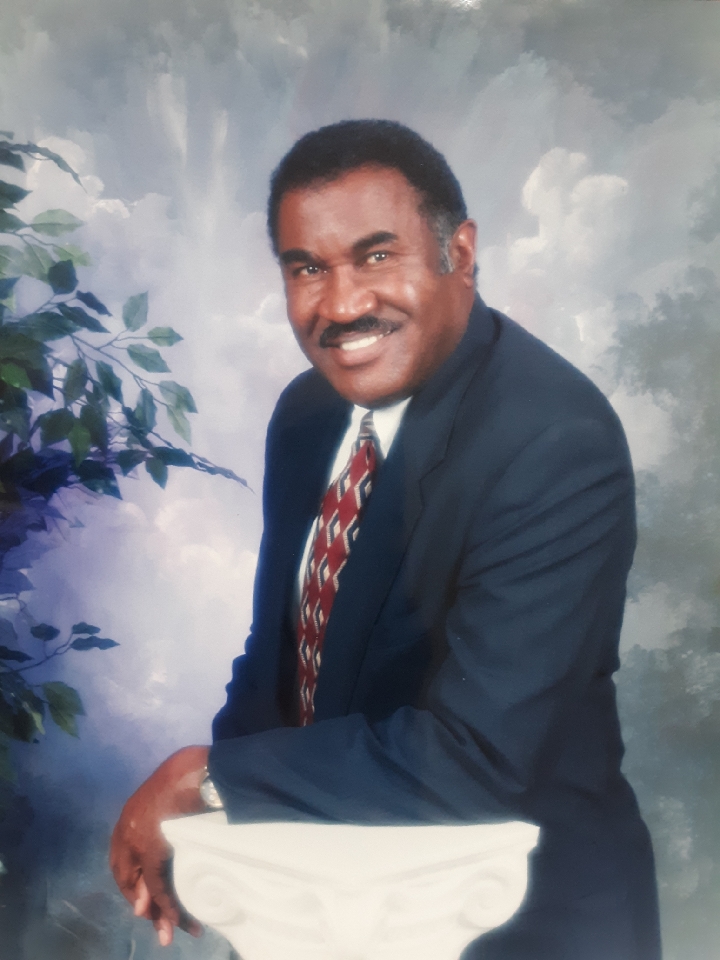
The storyline of Ilunga Adell’s success in Hollywood

If you’ve ever noticed the closing credits of some of America’s popular TV sitcoms – “Sanford and Son,” “City Guys,” “Married with Children,” “Roc,” “A Different World,” “Moesha,” “That’s My Mama,” “227,” just to name a few – the name Ilunga Adell might’ve caught your attention. 
Adell, a native Memphian, wrote several episodes of each sitcom and others as well. However, before his spate of film credits started adding up, it was “Sanford and Son” that launched him as a screenwriter, TV and film producer, and story editor. 
Ilunga Adell
It all began after Adell (born William Adell Stevenson III) left Memphis to pursue a career in acting and discovered his love for the theatre. A graduate of Hamilton High School, he’d moved to New York and delighted himself as a thespian. Then he added screenwriter to his repertoire.
 “When the opportunity for ‘Sanford and Son’ came up, I was prepared,” said Adell, reputed for his stage plays. Just by happenstance, he was asked by Aaron Ruben, the esteemed producer of “Sanford and Son,” to write a script for the show.
Known for producing “The Andy Griffith Show” and “Gomer Pyle, U.S.M.C.,” Ruben was getting flak, Adell said, because he didn’t have any black writers for “Sanford and Son.” 
“He said he couldn’t find any.” 
Adell was in his early 20s and working at the Public Theater, an arts organization in New York City that Joseph Papp founded as the Shakespeare Workshop for up-and-coming playwrights and performers.
The theater was revered for showcasing the works of the best playwrights and performers, including Adell and others like Jason Miller, who wrote a play called “Championship Season.” He also starred as a young priest in the “Exorcist.”  
Adell was in good company with several well-known playwrights. Ruben discovered this fact when he noticed a photo of them in a New York Times article. According to Adell, Ruben said, “Well, they wrote for Papp, they can write for us.” 
He said Ruben then contacted the theater and asked him to come to California. A play Adell had written was already in the hopper and he was acting in another one when Ruben called. 
“They wanted to talk to me about doing ‘Sanford and Son,’” said Adell, who had not seen the show at that time.
Norman Lear was the executive producer of “Sanford and Son.” He said Lear and Ruben had cast funnyman Redd Fox in the lead role and actor Grady Demond Wilson as his son Lamont. 
Wilson wasn’t a stranger to Adell. “The (Off-Broadway) play I did in New York, ‘Five on the Black Hand Side,’ one of the actors in that play was Demond Wilson,” he said. 
Adell’s character was named Gideon and Wilson played the First Junkie. This was Adell’s first play in New York at the American Place Theatre.
After arriving in California and settling in his hotel room, “they gave me a couple of tapes (of “Sanford and Son”) to watch.” Confident as a writer – even though he had no experience writing for TV – Adell produced a couple of episodes.
Ruben liked what Adell had written for one of the episodes. But then he asked him to go back to the hotel and this time write a story outline. He was given a template to follow. 
“As I’m writing up my idea, dialogue comes to my mind. So I just started writing dialogue,” said Adell, and returned with 10-12 pages of dialogue. But Ruben was upset, he said, until he started reading. 
Then he started chuckling, Adell recalls, and followed with an imperative: “Okay, fine, go write the script.”
Adell had never written a script for TV, taken a writing class, or studied at a film school. What he did have was innate writing ability that he managed to hone into a new set of skills. 
He’d never written a comedy either, saying instead, “I considered myself a serious writer.” 
“Sanford and Son” was Adell’s foray into the business. Now he’s a bona fide screenwriter. “I had a knack for writing,” he said. “But through usage and overtime, the knack became a skill. I was always a good writer, but I’m a much better writer now.”
Adell had performed in, written, and directed productions at the American Place Theatre, The Black Magicians theatrical troupe, the Negro Ensemble Company, and, of course, the Public Theater in New York.
He debuted a short film, “Avenging Angels,” last year in October at the Black Hollywood Education Resource Center (BHERC) 25th Anniversary African American Film Marketplace & S.E. Manly Short Film Showcase in Los Angeles, Calif. 
“Avenging Angels” is about two 16-year-old’s violent confrontation with an adult sexual predator. Supported by Films With A Purpose, Adell wrote and directed the 29-minute film. He has already completed the script for a feature film of “Avenging Angels.”
Not bad for a Memphian who continues to rack up film credits in Hollywood. Now he’s working with kids in an afterschool program in Memphis and Shelby County called Knowledge Quest.

Saturday, February 22, 2020

Remembering John A. Simpson of the Memphis State Eight

The Memphis State Eight (circa 1959): Luther McClellan, Marvis Kneeland Jones,
Sammie Johnson, Ralph Prater, Eleanor Gandy, Rose Blakney Love, Bertha
Rogers Looney and John Simpson. (Courtesy photo)
In the fall of 1959, eight African-American students broke the color barrier and integrated the former Memphis State University (now the University of Memphis). Known as the “Memphis State Eight,” four of the eight are now deceased.
John Arthur Simpson is the latest member to die, on Feb. 8. Two others also died, ironically, in February, Black History Month: Eleanor Gandy, 76, who died Feb. 6, 2017, in Charlotte, N. C.; and Rose Blakney-Love, 75, who died Feb. 12, 2017, in Memphis. Sammie Burnette Johnson, 71, died on Dr. Martin Luther King Jr’s birthday on Jan. 15, 2011. 
Robert E. Simpson Sr. has fond memories of his brother. “We were closer than most brothers. We were inseparable,” he said. “We went to church together, sang in the male chorus together, went to the Grizzlies games together. We enjoyed our relationship as brothers.”
John Arthur Simpson
Mr. Simpson was eulogized on Feb. 14 at Trinity Christian Methodist Episcopal Church. He was 78. Friends and loved ones paid respect to a man who unwittingly made history by defying the status quo.
He and seven others, with moxie aplenty, challenged the university and gained entrance into the all-white institution that once judged them based on the color of their skin rather than scholarship.
Mr. Simpson has been laid to rest now. His accomplishments are duly noted in his obituary and in the annals of history. As Black History Month winds down, only four of the Memphis State Eight remain: Luther McClellan, Marvis Kneeland Jones, Ralph Prater and Bertha Rogers Looney.
 “Last year in September we celebrated 60 years,” said Looney, recalling the 18th day of that month when the University of Memphis honored the five remaining members of the Memphis State Eight.
“I thought it was ironic that we were caught up in history,” she said.
Looney remembers Mr. Simpson as an intellectual who wanted to make sure that everyone was doing well. “I admired him. He was a great person,” she said. “When I walk back on campus, his spirit will be with me.”
“They all seemed to weather the storm and came out balanced,” Simpson said. However, he added that his brother soon grew tired of the rigmarole and didn’t finish Memphis State.
He left the university and married his sweetheart in 1961 from Manassas High School, the former Marion Larkin. He also joined the U.S. Air Force that year and remained for 28 years and retired with the rank of major. After returning to Memphis, he joined MetLife as a retirement marketing sales representative.
Mr. Simpson had made a life for himself after his ordeal at Memphis State University and joined the ranks of other trailblazers who found themselves embroiled in the Civil Rights Movement.
Much to his chagrin, Mr. Simpson had other plans.
“He didn’t like the way he was being treated at Memphis State. They had to sit in a special area. They couldn’t go to the games,” said Markhum “Mark” L. Stansbury Sr., who served as special assistant to Dr. Shirley Raines and three other university presidents.
Once denied admission to the university, Stansbury advocated for the Memphis State Eight. Soon a historical marker was erected in front of the Administration Building in 2006. Raines, then president of the university, welcomed the trailblazers back on campus for the special honor.
Mr. Simpson was in attendance, Looney said, and, like the other trailblazers, welcomed the fanfare. Sixty years ago, they were isolated and faced unbearable hardships trying to get a college education. Now they are celebrated.
Stansbury said he noticed nearly a dozen non-blacks at Mr. Simpson’s funeral. “Back in the day, they couldn’t accept you. Now 60 years later, non-blacks can accept you for what you did.”

St. Jude’s children ignite one man’s passion for giving

Eugene Phillips (standing third from right) is surrounded by his friends and supporters.
Children grappling with catastrophic diseases at St. Jude Children’s Research Hospital in Memphis are being treated by the best of doctors without their families worrying about paying the bill.
That’s why fundraising is integral to the hospital’s success and important to Eugene Phillips, who started raising money over 30 years ago in honor of his birthday. In lieu of receiving gifts, he asks his friends to donate to St. Jude. 
On Feb. 10, Phillips welcomed several of his friends into his lavish home in Germantown to celebrate his 69th birthday – which was actually Feb. 12. They supped with him and, of course, donated to the hospital. 
“He doesn’t allow you to bring gifts for him,” said Janelle R. Eskridge, who attended the event with her husband, Reginald L. Eskridge, both attorneys and longtime friends of Phillips.
Dino Palazzolo (right) and his wife, Louisette, are longtime
friends of Eugene Phillips and his support of St. Jude. They
brought a gift to show their appreciation. (Photos
by Wiley Henry)
The idea of raising funds for St. Jude’s children ignited Phillips’ passion for giving after touring the hospital one day with the late Sandy Vogel Lewis, a longtime community activist and board member of St. Jude.
“I asked her to take me on a tour and I was impressed,” said Phillips, a respiratory therapist who has been in the medical profession for 48 years. He has raised to date nearly $100,000.
“Eugene is a selfless individual,” said James Bridges Jr., Phillips’ cousin. “It’s a wonderful gesture that he would take this time to celebrate his birthday and support the children of St. Jude.”
This is the third birthday celebration and fundraiser for Bridges and his wife, Anita. His mother, Doris Bridges, and aunt, Gwendolyn Nelson, were earlier supporters of Phillips, but could not make it this year.
Terry Pickett and his wife, Gisela, live approximately three blocks from Phillips. They have supported Phillips for 10 years and wish him the best as he endeavors to lend St. Jude a helping hand. 
“It’s typical of Eugene. His whole life is dedicated to serving people,” said Terry Pickett, a retired college professor who taught at the University of Alabama in Tuscaloosa, Ala., and at Sanford University in Birmingham, Ala.
“He is so positive. It’s unbelievable,” Gisela Pickett added.
Dino Palazzolo said Phillips is the most loyal person and that he is a friend of St. Jude. He added: “He has the enthusiasm for St. Jude. He donates and never asks for anything for himself.”
Palazzolo and his wife, Louisette, have been friends with Phillips for 40 years. “We try to make every party he has because of St. Jude,” he said.
Phillips has a heart for philanthropy and a hearty spirit for giving. What he does for St. Jude’s children means a lot to him. “This is an encouragement for young black people to help somebody,” he said, and added that people have to be taught to give. 
Giving is second nature to Phillips.
Like the others, Dr. Gregory Hanissian also responded to Phillips’ clarion call for help. He and his family, Phillips said, have been supportive of his birthday and St. Jude fundraiser throughout the years.
Phillips said Jim and Sarah Schwab are avid supporters. She was present, but her husband, Phillips was told, has been grappling with an illness and was not well enough to make it.
Other longtime supporters of Phillips once again made the annual pilgrimage to his home, including Sally Molasky and Rita Hutchings, Michael Fahr and his fiancĂ©, Sara Alwafai, and Zeina Alwafai and her friend, Matthew Yarbrough. 

Tuesday, January 7, 2020

Emogene Watkins-Wilson was a trailblazing journalist who taught life-lessons

One of the last writing projects that Emogene Watkins-Wilson was working on was a biography of her late husband, L. Alex Wilson, the venerable editor and general manager of the Tri-State Defender during the 1950s.
L. Alex Wilson rose to national prominence after cameras caught a white mob savagely beating him while he was reporting on the Little Rock Nine’s integration of Little Rock Central High School on Sept. 23, 1957.
Emogene Watkins-Wilson
Mrs. Wilson herself was a trailblazing journalist working on a career of her own during that turbulent period in the nation’s history and devoted much of her life to writing and teaching school before retiring after 35 years. 
On Dec. 25, after struggling with a recent illness, Mrs. Wilson died at St. Luke’s Episcopal Hospital in Woodlands, Texas, where she was living with her daughter and son-in-law, Karen Rose Wilson-Sadberry and Alonzo J. Sadberry. She was 95.
Wilson-Sadberry remembers the life that her mother lived and the life-lessons she taught. She was her parents’ only child and called her mother a good friend. She also was inspired and enamored with her gift of writing and overall humanity. 
Considering the era in which Mrs. Wilson launched her career in journalism apparently did not hamper the strides she’d made going forward. 
She worked briefly for the Afro American newspaper in Washington, D.C., and for Life Magazine between 1952 and 1954 while teaching school. She also served as the women’s editor and society columnist for the Tri-State Defender between 1952 and 1956.
During this time, when the civil rights movement was rising to a crescendo, Mrs. Wilson met and married the Defender’s new editor, L. Alex Wilson, who died four years later. The severe head trauma that he’d sustained in Little Rock was suspected to be the cause of death.
Meanwhile, Mrs. Wilson tarried on. She continued to teach and write. Her articles appeared in other publications as well, such as The Memphis Press-Scimitar and The Commercial Appeal.
Emogene Watkins-Wilson (seated left)
spends time with her daughter and son-
in-law, Karen Rose Wilson-Sadberry and
Alonzo J. Sadberry. (Courtesy photos)
“She was a very committed person,” Wilson-Sadberry said. “She worked really hard, studied, made preparation, and was committed to excellence.”
Excellence was deeply rooted in Mrs. Wilson’s DNA. She grew up in North Memphis. Her father, Dr. Thomas H. Watkins Sr., was a physician who located his office at Bellevue and Jackson. 
Mrs. Wilson’s father graduated from Meharry Medical College in 1911. He was originally from Baltimore, Md. Her mother, Johnnie R. Watkins, was an educator and hailed from Tuskegee, Ala. 
Like her mother and father, Mrs. Wilson followed the path to higher education. She graduated from Howard University with Bachelor of Arts degrees in English and Journalism. 
She also completed coursework in Spanish at Howard and later studied Spanish in Mexico. This skills-set enabled her to teach all levels of Spanish to her students in high school. 
Mrs. Wilson’s penchant for writing, her pursuit of higher education, and her commitment to the community were impetuses that led Wilson-Sadberry to sharpen her own skills.
Rodney Van Miller, Wilson-Sadberry’s cousin, said Mrs. Wilson was “not just an aunt but a mother. She became the mother that I needed to pull me through.”
His own mother, Marilyn Miller, his aunt’s youngest sister, died when he was 13. He said his aunt stepped in as a surrogate and nurtured him as her own. “She promised my mother that she would look out for me,” he said.
The maternal benefits that Wilson-Sadberry enjoyed was likewise afforded to Miller, who lived with his father, Albert Miller, two streets over from his aunt in the Glenview community. 
“Her death is a chapter-changing moment in my life,” he said.
Like Wilson-Sadberry, Miller recalls his aunt’s particular skills in writing and the impact that she made in the community and in the classroom – and particularly on him when she was teaching at Hamilton High School.
“She would help me with my papers and made sure that I was on point,” said Miller, a graduate of Wooddale High School. “She taught me different life-skills that I use today. She was sweet and firm…and gave me the structure that I needed.” 
Mrs. Wilson was very influential in the classroom and the community, her daughter added. She touched the lives of many people, whom she either taught or wrote about on the pages of various publications. 
“She opened the window of opportunities for others, particularly her students,” said Wilson-Sadberry, who graduated in 1975 from Hamilton High School, where her mother was teaching English, Journalism, and Spanish.
Some students may feel uncomfortable attending the same school where a parent is teaching. Wilson-Sadberry wasn’t fazed by the arrangement. “It worked out,” she said. “We supported each other.”
Based on her family’s pedigree, education was the key to upward mobility, which Wilson-Sadberry understood. She pursued a Ph.D. like her grandfather, who inspired her just as much as her mother had and retired from Texas A&M University in 2013 as a sociology professor.
Wilson-Sadberry and her husband have a 23-year-old son, Adam Wilson Sadberry. She wants him to understand his grandmother’s legacy and what she meant to a lot of people. 
“It’s been good to talk to him about mother and what she was all about,” she said.
A visitation for Mrs. Emogene Watkins-Wilson is Thursday, Jan. 9, from 6 p.m.-8 p.m., and on Friday, Jan. 10, from 11 a.m. to noon at Emmanuel Episcopal Church, 4160 Boeingshire Dr., in Memphis. 
She will be eulogized at the church at noon on Friday, Jan. 10, and interred in Historic Elmwood Cemetery with her husband, L. Alex Wilson. M.J. Edwards Funeral Home has charge.

Mariah Michelle: ‘Music is My Testimony’

"Black Diamond," the EP. (Photo by Doug Bedford)
If you listen to “Free From Me” on the EP “Black Diamond,” you’ll learn a lot about Mariah Michelle Stokes. She is a young, rising soloist striking a familiar chord that young women like her would understand. 
“I’m very emotional and vulnerable,” said Stokes, 22, who uses “Mariah Michelle” as her stage name. “I wrote that song when I was depressed during a very dark time in my life.”  
What resulted from that somber experience was Mariah Michelle’s heartfelt testimony that she set to music. “I went through some things in life and I felt like music is my testimony,” she said. 
With rock-solid confidence now, Mariah Michelle hopes to inspire people, young or otherwise, via “Black Diamond,” a compilation of five R&B/soul selections with message-laden lyrics that inspire and motivate.
Mariah Michelle was front and center
at the Juneteenth Urban Music Festival
last year at the historic Robert R. Church
Park in downtown Memphis. (Photo
by Wiley Henry)
“Black Diamond” is the title track. The others are “Go Get It,” “Be Loved,” “Break,” and, of course, “Free From Me.” The songs are produced by Ja’Mar Productions.  
“All the songs have a message,” she said. “Black Diamond celebrates us. It’s a celebratory song about black people, about tearing down all stereotypes.” The remaining songs on the EP are just as compelling, she added.
Consider the chorus in “Black Diamond:” “You’re a black diamond, you gon shine forever/ They try to tie us down, but we gon reign forever/ When you black and you proud, it just don’t get no better/ All the mess we overcame, we on another level.”
While Mariah Michelle radiates confidence and touts the finished product as good – which took over a year to complete – her journey to creative expression could have ended before it began.
At the onset of her life, not long after awakening into the world, Mariah Michelle was diagnosed with an auto-immune disease called alopecia areata, which attacks hair follicles.
Completely bald now, the image that she showcases on stage and in her daily life is bold, alluring, and self-assuring. People gaze upon her baldness in admiration and surmise that it is fate that God has ordered.
 “Black Diamond” is Mariah Michelle’s foray into the music industry. But like many black singers, whatever the genre they inevitably end up singing, the church was their springboard. It’s no different for Mariah Michelle.
“We still got to walk by faith. Sometimes in the music industry it takes a while [to get noticed],” Mitchell Stokes, her father and manager, said. He plays lead guitar for his home church, Golden Gate Cathedral, and for The Soul Shockers, an R&B group.
Mariah Michelle is a praise dancer and sings in the church choir. The message that she conveys in her music is tantamount to the message that comes forth when she sings God’s praises.
“My music is clear and inspirational,” she said, denouncing music about money, sex and drugs for music that uplifts and makes a positive statement.
“She has a gift and she’s anointed to do what she’s doing,” Mitchell Stokes said. “We want her to continue to grow in Christ, continue to love herself, and continue go after her dreams.”
Her mother, Sandra Stokes, embraces the objective of ensuring that Mariah Michelle is grounded and rooted in faith. She and her husband believe that all things are possible, considering the unpredictability of the music industry. 
“I’m just the prayer warrior,” Sandra Stokes said. “I don’t know about music. I just try to keep her committed and connected to Christ.” 
Mariah Michelle initially didn’t want to sing professionally, her father said. But then something happened. Someone had seen a video on social media of Mitchell Stokes’ little girl singing and contacted him.
“She has always sung,” he said. “Our family is musically-inclined. It’s inside of her.”
Mariah Michelle added her spin: “Music is in my genes. It’s a natural gift.”
Although music is her passion, “in my genes,” education is underscored. This year, Mariah Michelle will graduate from the University of Memphis with a bachelor’s degree in psychology. Why psychology?
“I’ve always been interested in the way people think, the way the brain works, and how people behave,” she explained.
Until she walks across the stage with her degree in hand, she’ll continue to sashay across the stage at other venues, where she’ll sing songs that accentuate the positive and evoke thought. 
A song on the EP, “Go Get It,” released on Nov. 29, is reflective of Mariah Michelle’s endeavor to go after what she wants in life with a clean-cut message that sets her apart from her contemporaries.
“…I’m gon do my own thing and go get it/ Go get it and unleash the champion/ Go get it…” she sings. “Whatever you want, go get it/ What you been hoping for, go get it.”
“Go Get It” is streaming on all major platforms, such as Spotify, Amazon, YouTube, Apple Music, and Google Play. “Black Diamond,” the EP, is $5. For more information, email info@moriahmichelle.com, or call 901-338-7028.

Monday, December 23, 2019

A helping hand for families in need

The Rev. Mark Hyde (left), the CEO of Abba's Helping Hands, and his wife Angela,
organized a toy drive at Bickford Community Center to help struggling families that
may not be able to afford gifts for their children (Photos by Wiley Henry)
The holiday season is not always jolly for families struggling to make ends meet. Many of them wouldn’t mind a helping hand. Abba’s Helping Hands, a 501 (c)(3) nonprofit founded in Memphis in 2007, is doing just that – helping families and individuals in need.  
On Dec. 19, more than 40 kids from the inner city were recipients of Abba’s Helping Hands at its sponsored toy drive at Bickford Community Center, where a roomful of toys and other playthings awaited the kids for pickup.  
“We bless people with furniture, food, clothing, for example, and people who’ve been burned out of their home,” said the Rev. Mark Hyde, Abba’s chief executive officer and assistant pastor of Breath of Life Seventh Day Adventist Church in East Memphis. 
“We just try to help as much as we can in the community,” he said.
Carasha Williams, 5, carried away at
least seven wrapped gifts
Abba is an Aramaic word meaning “Father” and used by Jesus in the New Testament to express intimacy and his personal relationship to God. 
Crystalyn Bobo felt Abba’s love and welcomed the organization’s help after two of her four children were gifted with a few toys apiece. “I’m happy about getting the new toys,” she said.
Seven-year-old Hannah Jordan, a second grader at Memphis Scholars Caldwell-Guthrie Elementary School, and Monique Jordan, who is nine and in third grade at the same school, were just as delighted as their mother to receive a handful of wrapped gifts.
“It helps,” Bobo said. 
Anitra S. Huston concurred. “It’s helping a lot of kids that may not get something. There are families that don’t have much,” said Huston, whose daughters, Sasha Green, 6, and Arianna Johnson, 2, received gifts. 
Huston learned about Abba’s toy drive after receiving a call from Memphis Scholars Caldwell-Guthrie Elementary School, where Sasha is in first grade. “She was picked to get a gift,” said Huston, who lives in the New Chicago community. 
The kids were wide-eyed and eager to investigate the lot of toys and playthings all around them, including Carasha Williams, 5, who carried away at least seven wrapped gifts.
Angela Hyde, wife of Abba’s CEO and one of several volunteers, said, “There’s something about seeing people’s needs and desires fulfilled and knowing I had a small part in making that happen.”
Hyde praises God for blessing Abba’s collectively and each one of them individually. “Whether through service of giving, when the Lord blesses us, it’s good to give back,” she said, and added that God “blesses our family, churches and the community.”
In short, she said, “It’s just good to give back.” 
Hyde is a vocal coach at AngelStreet, a 501 (c)(3) nonprofit housed at Bickford Community Center and in partnership with Oasis of Hope, a nonprofit organization that spawn AngelStreet, which first launched in 2014 before receiving its own nonprofit status two years later.
The Hydes counted on their volunteers to help make the kids’ holiday season a little brighter. Their names were compiled on a list to receive gifts. The volunteers checked the list once, twice, and once more to ensure that every kid was gifted something.
“We’ve touched a lot of people,” the Rev. Hyde said. He touted Abba’s outreach into the Memphis community and internationally, but heaped praise on the organizations and businesses that contributed to the toy drive.
Some of the organizations and businesses included E.H. Ford Mortuary Services, the drop-off location for donations; Organized Chaos Ent.; Metropolitan #161 NWPHGLTN-Central District; At Your Service! Facility Maintenance & Care, and The A.N.D.Y. (Assisting the Needs of Disadvantaged Youth) Project. Anonymous donors also contributed to Abbs’s toy drive.
The A.N.D.Y. Project, for example, “assists the needs of disadvantaged youth,” said Valerie Wright, the group’s president. Abba’s and the A.N.D.Y. Project are in lockstep with each other and serve the same constituents – the disadvantaged youth.
Wright was one of Abba’s dedicated volunteers who felt compelled to lend a helping hand. She understands that some youth are disadvantaged and that families lack the bare essentials to make ends meet.
Giving is a guiding principle of Abba’s Helping Hands. As the organization continues to bless the least of God’s people, the Hydes continue to call on “Abba, Father” to order their steps.

Thursday, December 12, 2019

Teen Town Singers keep memory of A C “Moohah” Williams alive

Fred Davis (standing) and Joan Patterson (right), daughter of A. C. "Moohah" Williams,
reflect on the era when they were the Teen Town Singers. (Photo by Wiley Henry)
They were the “children” of Andrew Charles “Moohah” Williams Jr., the trailblazing announcer at WDIA 1070 who used his influence to shape the lives young people.
A bevy of them, known as the Teen Town Singers, are now in their 70s and 80s and ambling along. There were hundreds of them altogether. On Dec. 7, at least 30 paid respect and celebrated the birthday of their founding father. He would have been 103 years old. 
Joan Patterson, Williams’ daughter, started the conversation by asking her fellow Teen Town Singers to give a testimony if her father had impacted their lives. She had her own memories to share as well. 
 “I was a little girl, and in those days the pompadour was very popular,” Patterson remembered. “I wanted my hair like that. But Mom didn’t feel like a two-year-old should wear it.”
Her father begged to differ. “Dad wanted to please his little girl. So he took a shoe spoon and wrapped my hair around it into a pompadour. He wanted me to feel like a little princess. I was his little princess.”
Bert Ferguson (left), WDIA's co-owner, chats with J.E.
Walker, founder of University Life Insurance Co. and
sponsor of the Teen Town Singers, and A.C. "Moohah"
Williams (right) in 1952, three years after Williams
founded the chorale group. (Courtesy photo)
Other testimonies were just as compelling and noteworthy, but mostly about the group that Williams steered to success. Some stories drew chuckles. He was their surrogate father and held them to account as he did Patterson, who sang with the group for six years.
“Mr. Williams was like a father to me. He was instrumental in me getting a scholarship for $250. That was a lot back then,” said Percy Wiggins, who used the money to attend Tennessee State University, Williams’ alma mater.
Williams doled out scholarships to other students as well. Markhum “Mark” L. Stansbury Sr. was awarded $100. “That got me through school at Lane College,” said Stansbury, who has been associated with WDIA for 62 years.
Williams was a stickler for education and frowned on wanton behavior, and tardiness, too. He taught biology at Manassas High School where he’d first organized a boys choir. While his work on the radio and in the community was tantamount to his success, he believed a good education was germane.
“All that I went through, I felt loved all the years we were together,” Mary J. Cooper said. “Mr. Williams was our dad and we were good children. That was the theme of the Teen Town Singers.”
Williams began organizing the Teen Town Singers in 1949 shortly after WDIA switched from country and western music to all-black, on-air personalities and programming to attract black listeners. 
Cathryn Rivers Johnson was the pianist for the Teen Town Singers. She taught at Booker T. Washington High School and was the musician for Salem Gilfield Baptist Church. A few in the group evoked her memory as well.
“I’ve known Mr. Williams all my life,” said Dorothy Herenton, the sister of former mayor Dr. Willie W. Herenton. “When Mr. Williams would come over to Booker T. Washington, he would visit Ms. [Cathryn Rivers] Johnson’s class.”
Herenton noted that Williams was a good man – “and he didn’t play.”   
Williams died three days before his birthday on Dec. 4, 2004. He’d worked at WDIA for 34 years as an announcer and director of community relations. Twenty-one of those years were spent organizing and directing the Teen Town Singers.
The group disbanded in 1970. They meet twice a year in honor of Williams – once in the spring and the other around his birthday. The camaraderie is heartfelt; the memories sustain them; and they keep his spirit alive.
Fred Davis, owner of the Fred L. Davis Insurance Agency, said Williams tapped him 27 years ago to chair the group. Williams was also Davis’ teacher at Manassas.
“This group means a lot to me,” Davis said. “I’ve been in this group more than any other group in this town. We still exist.”
Barbara Griffin Winfield said she had the best time in her life when she was a Teen Town Singer. “Don’t think people have forgotten about us,” she said, “because they haven’t.” 
Memphis hasn’t forgotten what Williams did to shape the lives and careers of the youth in his charge. Under his tutelage, their voices rang out over the airwaves at WDIA and they shared the stage with mega stars such as The Temptations, Smokey Robinson and the Miracles, and others.
Cheryl Fanion Cotton thanked God for Williams. “I will love him until I die,” said Cotton, who would eventually travel across the country and participate in the Civil Rights Movement. 
“I wish children today had a role model like A C Williams,” she said.